Dash Rapid Egg Cooker Manual Explained: Busting Common Myths and Mistakes
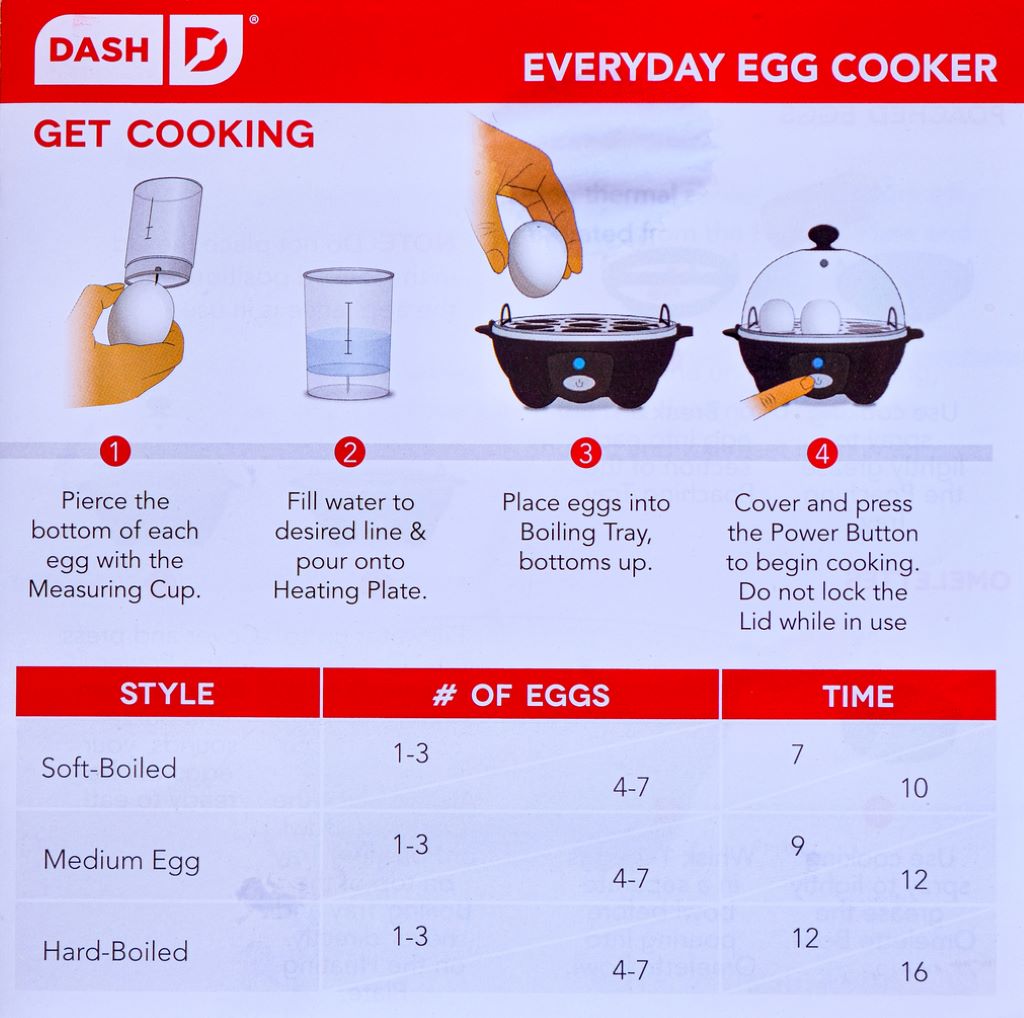
Pick up the translucent measuring cup included with the cooker, and you will encounter what looks like a glaring manufacturing typo. To make one soft-boiled egg, you pour significantly more water onto the heating plate than you do for six.
The reverse-ratio design is not an error; it is basic thermodynamics. The Dash does not cook via a mechanical timer. Instead, it relies on an electrical heating element that runs continuously until all water on the stainless steel base evaporates entirely, tripping a thermal cutoff sensor. The cooking duration is controlled exclusively by how many milliliters of water you introduce.
When you load the boiling rack with six large eggs, those eggs occupy physical volume beneath the plastic dome. That displacement leaves far less ambient headspace. Furthermore, six cool shells offer a massive collective surface area where steam continuously condenses and runs back down to the base plate to boil again. Because condensation cycles repeatedly, steam saturation occurs faster.
When you cook a lone egg, the dome contains substantially more open space. Steam escapes more rapidly through the tiny exhaust vent at the top, and less condensation drips back down. To keep the lone egg enveloped in active 212°F steam for the necessary duration, the cooker requires a larger starting volume of water.