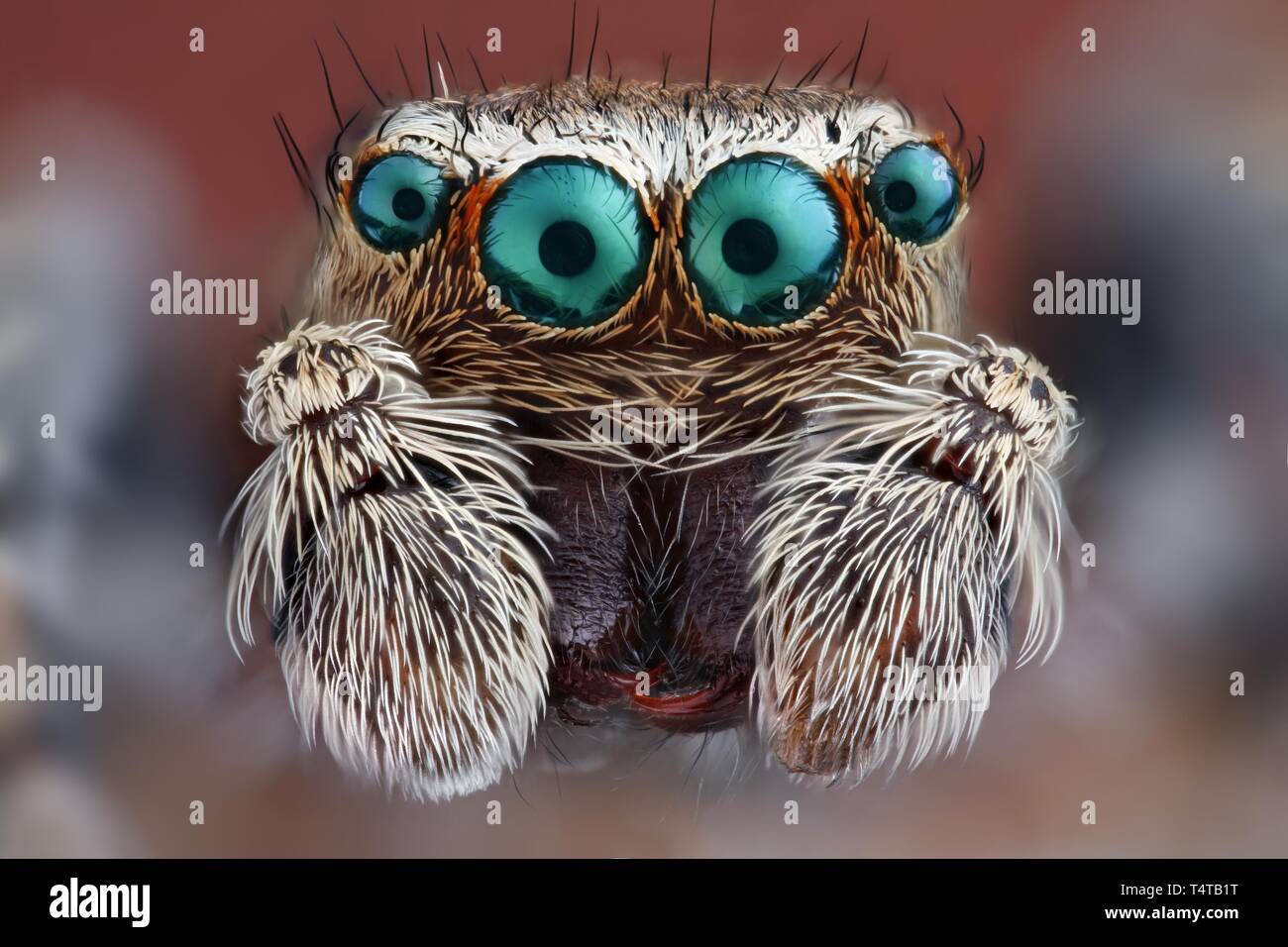
Fact-Checking Spider Vision: Do Spiders Actually See You Staring Back?
Human beings are wired for facial pareidolia. The brain constantly searches for two eyes, a nose, and a mouth in inanimate patterns, projecting intent onto non-human species. When a tiny jumping spider freezes, tilts its cephalothorax at an acute 45-degree angle, and seemingly stares directly into your pupils, your nervous system registers direct visual engagement. It feels personal.
That tilt is not emotional recognition. It is optical calibration. Jumping spiders (family *Salticidae*) possess an eye arrangement completely foreign to vertebrates. Their two large anteromedian eyes, the principal eyes, act like internal telephoto lenses. Because their rigid outer chitinous lens cannot distort like a human lens to change focus, salticids maneuver long, Boomerang-shaped retinal tubes located deep within their heads using three pairs of specialized muscles. When the creature tilts its head, it is literally repositioning the internal retina to sweep light across an incoming target.
What the spider registers is a localized zone of high-frequency motion. Blinking eyelids, shifting irises, and fluttering eyelashes present high-contrast, flickering edges. To an arachnid visual system calibrated to isolate prey and incoming predators, your eyeball represents an active, potentially threatening boundary of light and dark. It is not staring into your soul; it is tracking a fluctuating silhouette against a bright background.



.jpg/1280px-Will_Smith_4_April_2026_05_(cropped).jpg)