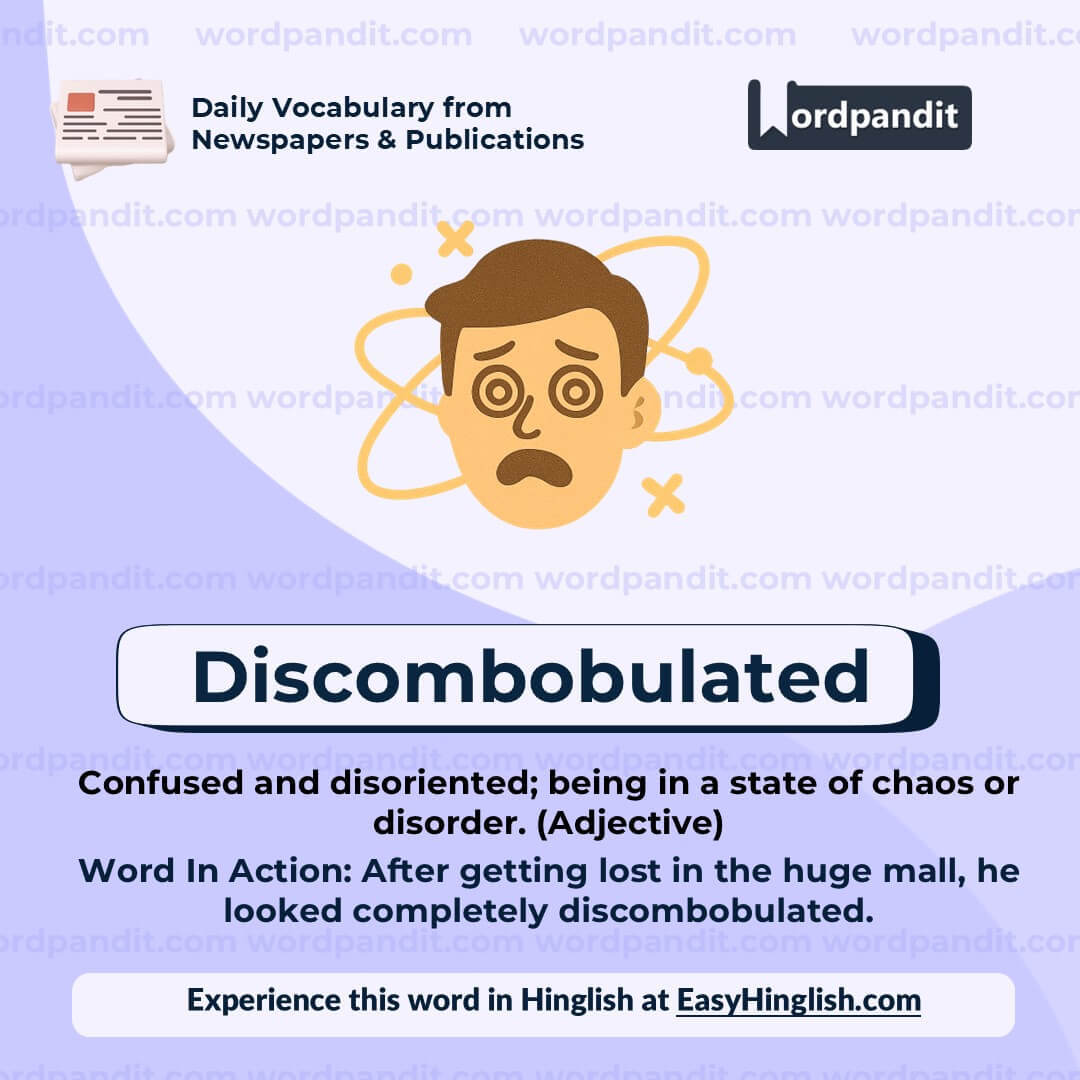
From 1830S American Humor to 2026 Feeds: the Complete Timeline of 'Discombobulate'
The etymology of discombobulate traces back to an eccentric movement in early 19th-century American linguistics known as "tall talk." During the 1830s, frontier Americans developed an appetite for grandiose, flamboyant coinages. Pioneers, riverboat gamblers, and country lawyers intentionally invented high-sounding words to lampoon European formality, academic pomposity, and legal jargon.
This era yielded colorful linguistic inventions such as absquatulate (to sneak off), bodaciously (completely), hornswoggle (to cheat), and flummox (to confuse). Writers achieved these effects through humorous pseudo-Latin formations, taking common Germanic or vernacular roots and slapping faux-classical prefixes (dis-, ex-) and suffixes (-ate, -ious) onto them.
Historical lexicographer Allen Walker Read documented the earliest known variant of the word in 1834, rendered as discomboboric. By 1839, print records displayed discombobulate and discomfuddle. Etymologists suggest the word was constructed from a collision of distinct linguistic elements:
- Discompose: A 17th-century English verb meaning to agitate or destroy the composure of someone.
- Discomfit: A Middle English term derived from Old French, signifying military defeat, routing, or total frustration.
- Bobbery: Anglo-Indian slang from the Hindi exclamation Bāp re! ("O father!"), popularized by British sailors in the early 1800s to mean a noisy quarrel, brawl, or tumult.
By splicing the Latinate prefix dis- with the lively cadence of bobbery and tacking on a formal -ate suffix, 19th-century humorists created a caricature of elevated speech that quickly entrenched itself in everyday American talk.