From High School Chemistry to Modern Labs: the Complete Evolution of the Mole Concept
You cannot predict chemical reaction outcomes by weighing ingredients against each other directly. Mass is conserved during reactions, but chemical proportions depend on molecular ratios. A balanced chemical equation displays stoichiometric relationships, not gram quotas.
Look at the Haber-Bosch synthesis of ammonia:
$N_2 + 3H_2 \rightarrow 2NH_3$
One mole of nitrogen gas reacts with three moles of hydrogen gas to produce two moles of ammonia. If you simply mix 10.0 grams of nitrogen with 30.0 grams of hydrogen, you do not get a balanced synthesis. The chemical system stalls long before the hydrogen is consumed.
Convert both values to moles to uncover the true reaction dynamics:
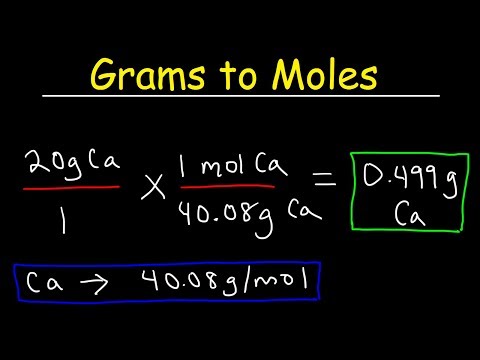
The molar mass of diatomic nitrogen ($N_2$) is 28.014 g/mol. Dividing 10.0 grams by 28.014 g/mol gives 0.357 moles of $N_2$. Diatomic hydrogen ($H_2$) carries a molar mass of 2.016 g/mol. Dividing 30.0 grams by 2.016 g/mol yields 14.88 moles of $H_2$.
According to the 1:3 ratio, 0.357 moles of nitrogen require just 1.071 moles of hydrogen. You have flooded the chamber with nearly fourteen times the hydrogen needed. Nitrogen acts as your limiting reactant, halting the reaction once 0.714 moles (12.16 grams) of ammonia form. The remaining 13.8 moles of hydrogen sit completely unreacted. Without converting grams to moles beforehand, predicting reaction dynamics is impossible.