
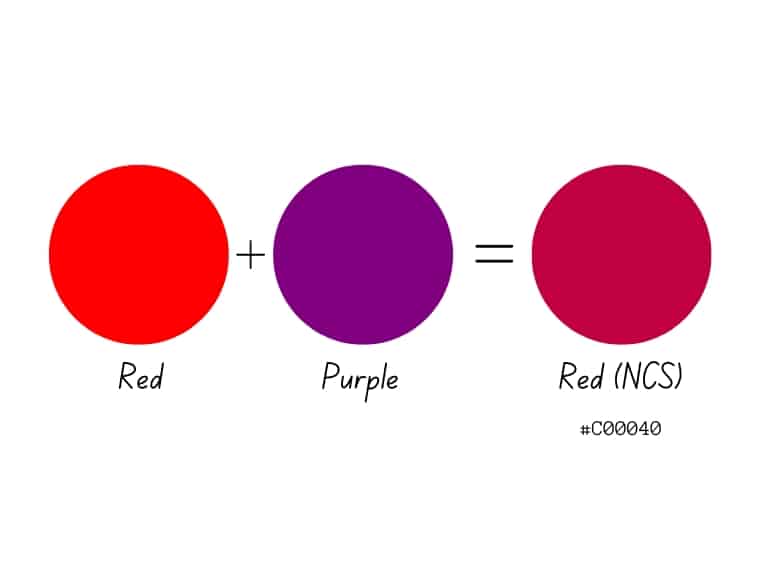
Red Plus Purple Swatch Test: What Real Pigments Actually Create
Every tube of red paint contains a hidden thermal identity. This subtle bias determines whether your mixture sings with clarity or collapses into sludge.
Warm reds, such as Cadmium Red Light or Vermilion, contain subtle yellow undertones. When you combine a yellow-biased red with purple, you are accidentally mixing all three primary colors simultaneously: red, blue (from the purple), and yellow. In subtractive color theory, combining all three primaries moves the pigment toward brown or neutral grey.
Artists frustrated by murky mixtures usually blame the purple. The real culprit is the warm red. The rogue yellow molecules act as complementary spoilers against the violet.
Cool reds, by contrast, possess blue undertones. Quinacridone Magenta, Permanent Rose, and Alizarin Crimson lean naturally toward the blue side of the spectrum. Blending these with purple introduces zero yellow contamination. The resulting mix retains stunning clarity, delivering electric purples and luminous jewel tones.
If your goal is a radiant magenta, select a cool, transparent red. If your goal is an earthy maroon or rustic russet, deliberately pick a warm red with yellow undertones to mute the vibrancy down to earth.


