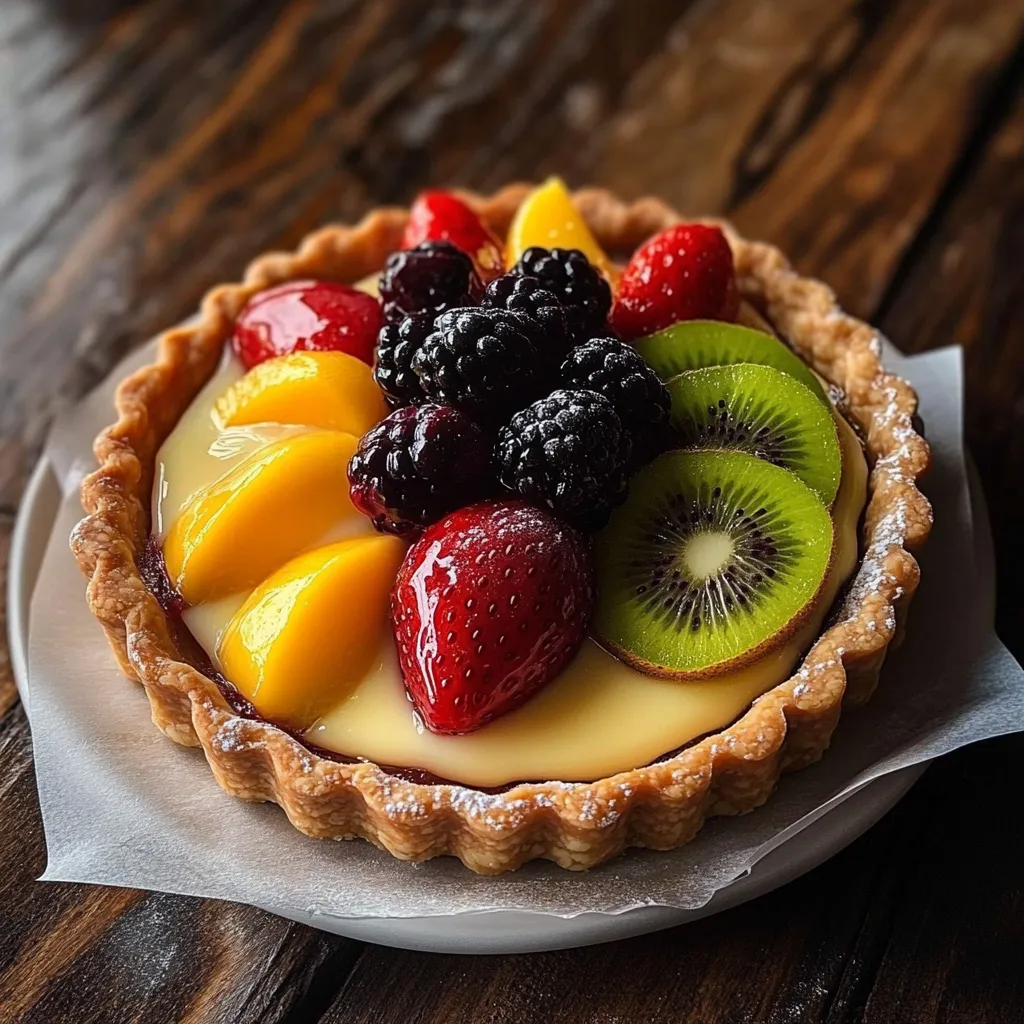
The Bakery Secret Behind Crisp Fruit Tarts That Never Turn Soggy
Water moves along an osmotic gradient. A standard custard filling carries a high water activity metric, often exceeding 0.95 aw. A thoroughly baked pastry shell sits at less than 0.30 aw. When those two elements touch without an engineered seal, water molecules instantly begin migrating into the dry starch matrix of the baked dough.
The starch granules in wheat flour swell when exposed to moisture. In a classic flaky pie dough (pâte brisée), pockets of steam create large, open lamellar sheets during baking. Those voids act like dry sponges. Once the cream rests against them, capillary action draws water deep into the crust core. Within two hours, the crisp snapping sound of the crust gives way to a dull, rubbery tear.
Standard home recipes compound this failure by advising cooks to pour warm pastry cream directly into a room-temperature crust. Heat accelerates molecular mobility. Putting hot or lukewarm custard into an unsealed shell cuts the degradation time in half, destroying crispness before the tart even reaches the dinner table.