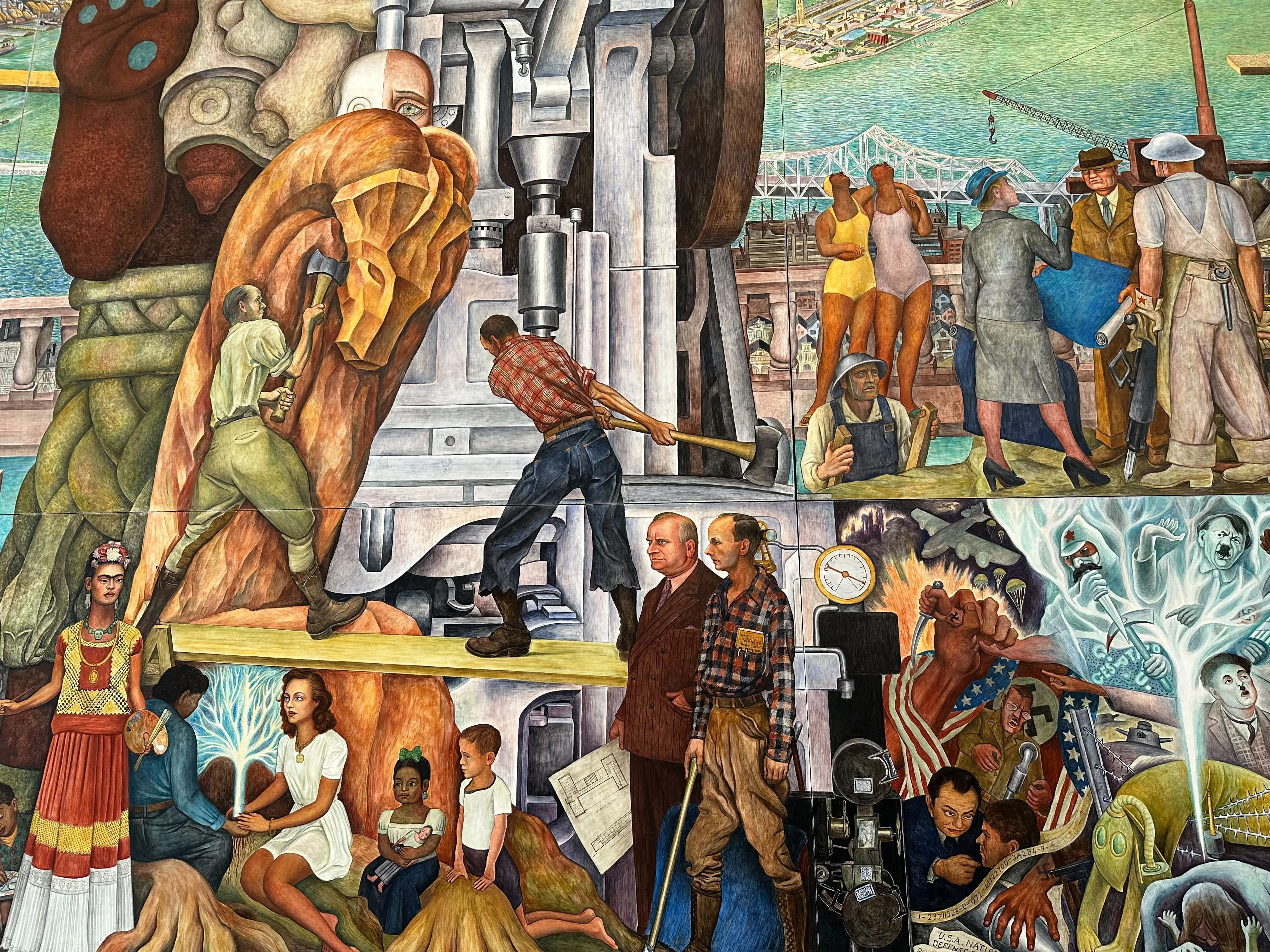
The Forgotten Italian Journey: How Renaissance Frescoes Secretly Sparked Diego Rivera's Revolution
By 1920, Rivera had hit an intellectual wall in Paris. He was living among the Parisian avant-garde, mastering analytical and synthetic Cubism alongside Pablo Picasso, Juan Gris, and Georges Braque. Cubism offered exceptional spatial training. It allowed Rivera to disassemble volume, manipulate multiple perspectives, and challenge academic perspective. Still, canvas painting felt increasingly claustrophobic to an artist preoccupied with mass political mobilization.
Private easel painting served a bourgeois market. Rivera wanted an art form that could communicate with an illiterate populace emerging from a brutal decade of civil war. Alberto J. Pani, Mexico’s diplomatic representative in France, noticed Rivera's frustration and arranged the financial support that sent him across the Alps. The assignment was straightforward: study the grand decorative traditions of Italy to see how they might serve the reconstruction of Mexican civic life.
Arriving in northern Italy in early 1920, Rivera encountered the public monuments of the Trecento and Quattrocento. In Padua’s Scrovegni Chapel, Giotto di Bondone’s narrative cycles demonstrated how narrative painting could organize human movement through an architectural space. Giotto did not treat the wall as an ornament; the wall served as a civic classroom. Rivera realized that the Italian painters of the 1300s and 1400s had solved the precise communication puzzle confronting post-revolutionary Mexico.


:max_bytes(150000):strip_icc():focal(749x0:751x2)/nelly-furtado-people-3-13b9442f1be341868db6c8042e6d2d57.jpg)