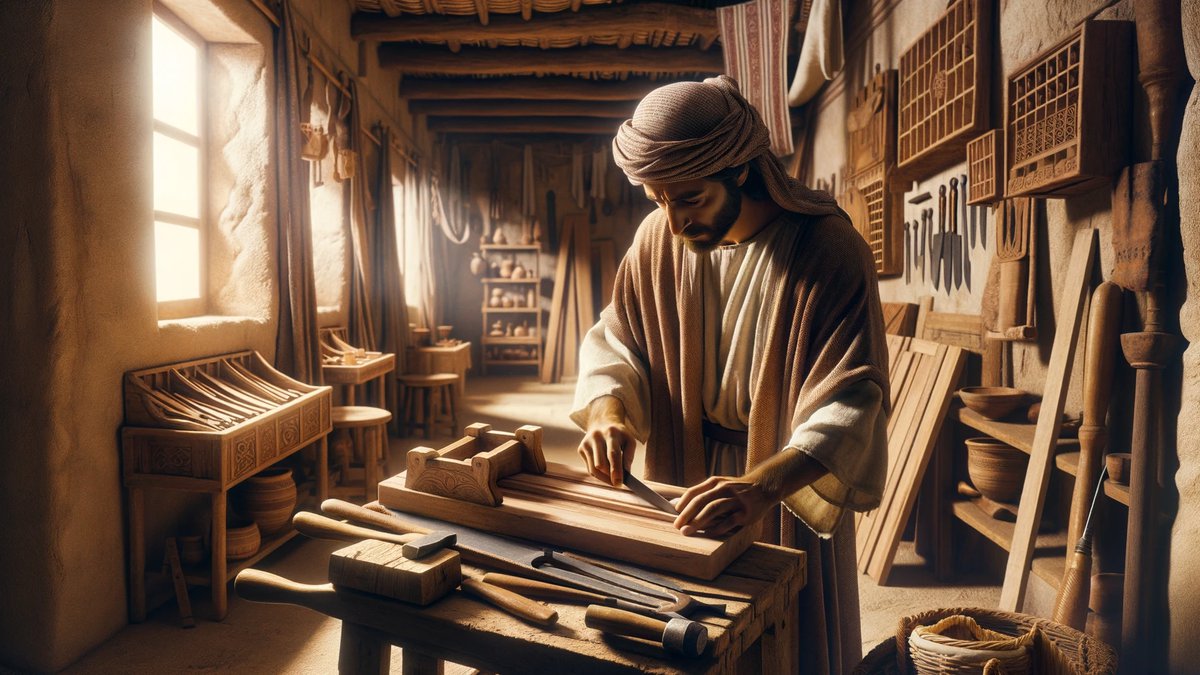
Was Jesus Really a Carpenter? the Surprising Greek Meaning Behind His Biblical Trade
Q1: Why did English Bibles choose the word "carpenter" instead of "stonemason"?
A1: Early modern English translators, working from William Tyndale to the King James committee, lived in timber-rich Western Europe where carpenters built the frames of homes and civic halls. They translated the Greek term tekton using their contemporary vocabulary for general structural builders, not anticipating how the word would narrow in modern usage.
Q2: Did Jesus and Joseph ever work with wood?
A2: Yes, to a minor extent. A village tekton was an all-around fabricator. While the vast majority of local construction involved limestone and masonry, an artisan would also carve wooden ox-yokes, repair plows, assemble roof crossbeams, and carve door lintels whenever wood became available.
Q3: What was the social and economic standing of a tekton in ancient Judea?
A3: A tekton belonged to the lower-middle tier of the working class. They ranked below landowning peasants who produced their own food, but above enslaved people and beggars. They were manual wage earners dependent on contracts, day labor, and physical resilience. A prolonged injury or regional drought that halted construction could quickly push an artisan family into severe debt.