
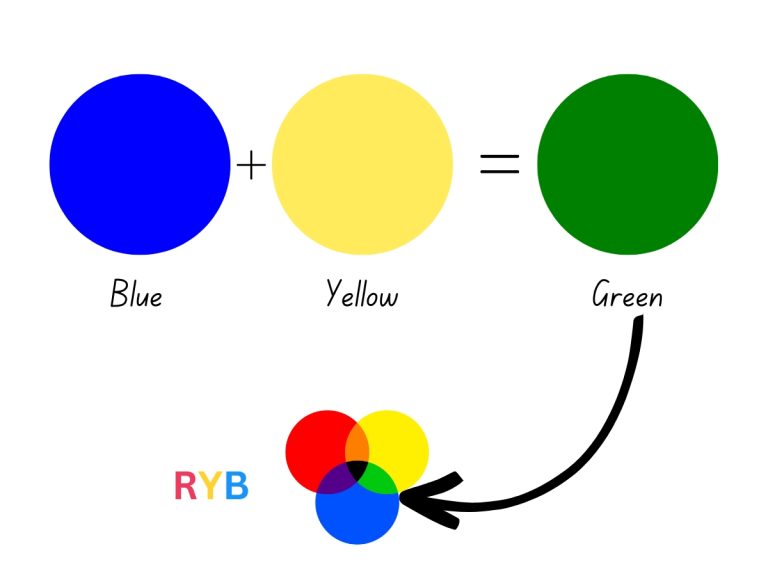
What Color Does Yellow and Blue Actually Make? Visual Guide to Pigments, Dyes, and Screens
The physical transformation from yellow and blue to green operates through subtractive color mixing. Physical surfaces do not produce their own luminescence. Instead, pigments and dyes absorb specific portions of ambient white light while reflecting the remaining wavelengths into your eyes.
White daylight contains every visible wavelength along the electromagnetic spectrum, spanning roughly 380 to 750 nanometers. When white light strikes yellow paint, chemical compounds in the pigment absorb high-energy blue and violet wavelengths while reflecting wavelengths between 550 and 700 nanometers (green, yellow, and red). When light strikes blue paint, the pigment absorbs low-energy red, orange, and yellow wavelengths, reflecting primarily blue and green bands.
When you stir both paints together, the yellow pigment swallows the blue light, and the blue pigment swallows the red and yellow light. The only band of light that neither pigment completely absorbs sits squarely in the middle: the green wavelength, which spans roughly 495 to 570 nanometers. Because that green sliver is the only light reflected back to your retinas, your brain perceives the mixture as green.


