Why the Square Root of 7 Can Never Be Written as a Fraction
Every schoolchild begins arithmetic with ratios. You take a whole object, slice it into equal pieces, and count those pieces. Rational numbers feel safe because they behave like measurements on a physical ruler. Fractions like 1/2, 22/7, or 355/113 either terminate cleanly or enter predictable, repeating loops. For centuries, early civilizations assumed that all measurable distances in the physical universe could ultimately be written as ratios between whole numbers.
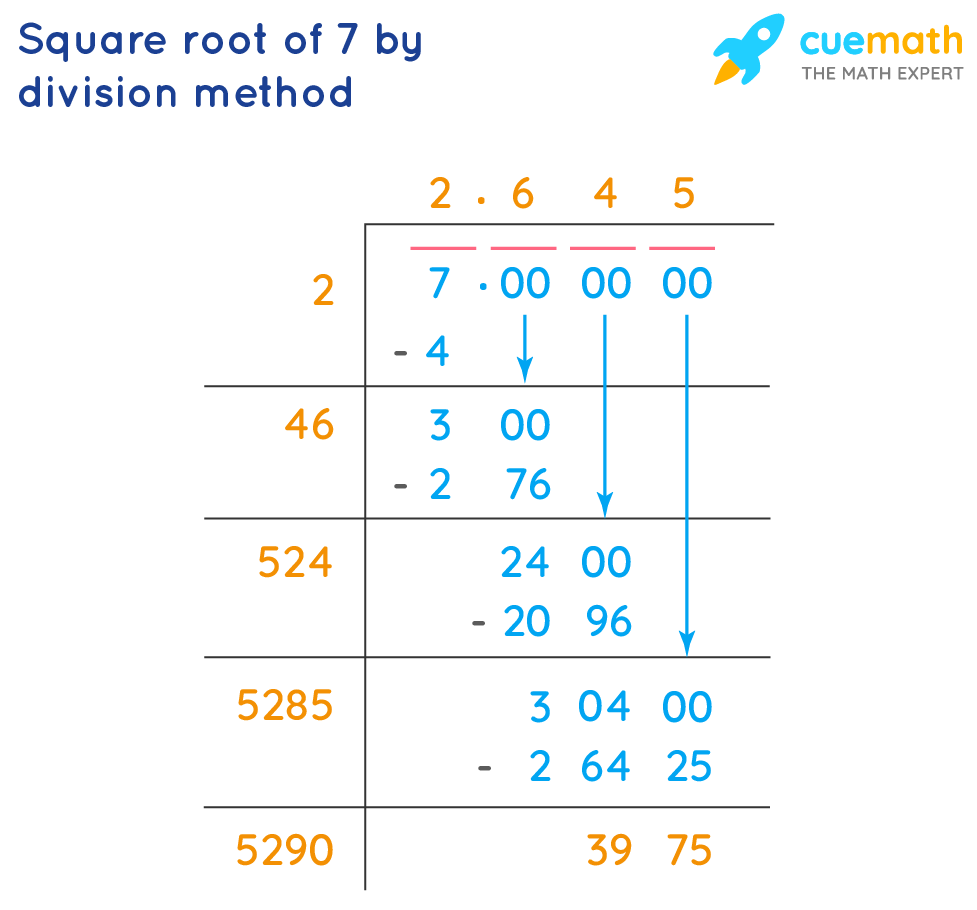
The radical expression √7 shatters that assumption. Seven is not a square number. It sits trapped between the perfect squares 4 and 9. Therefore, its square root falls strictly between 2 and 3. If you search for an exact rational coordinate on the real number line where a number multiplied by itself yields precisely 7, you discover an invisible void. The coordinate exists as a geometric length, yet no fraction can ever hit it.
This division separates rational quantities from irrational values. When Greek mathematicians first recognized that the square root of non-square integers defied fractional representation, it upended classical philosophy. Far from being an abstract quirk, the irrationality of √7 highlights a fundamental truth about prime numbers: their square roots are radically uncompromising.