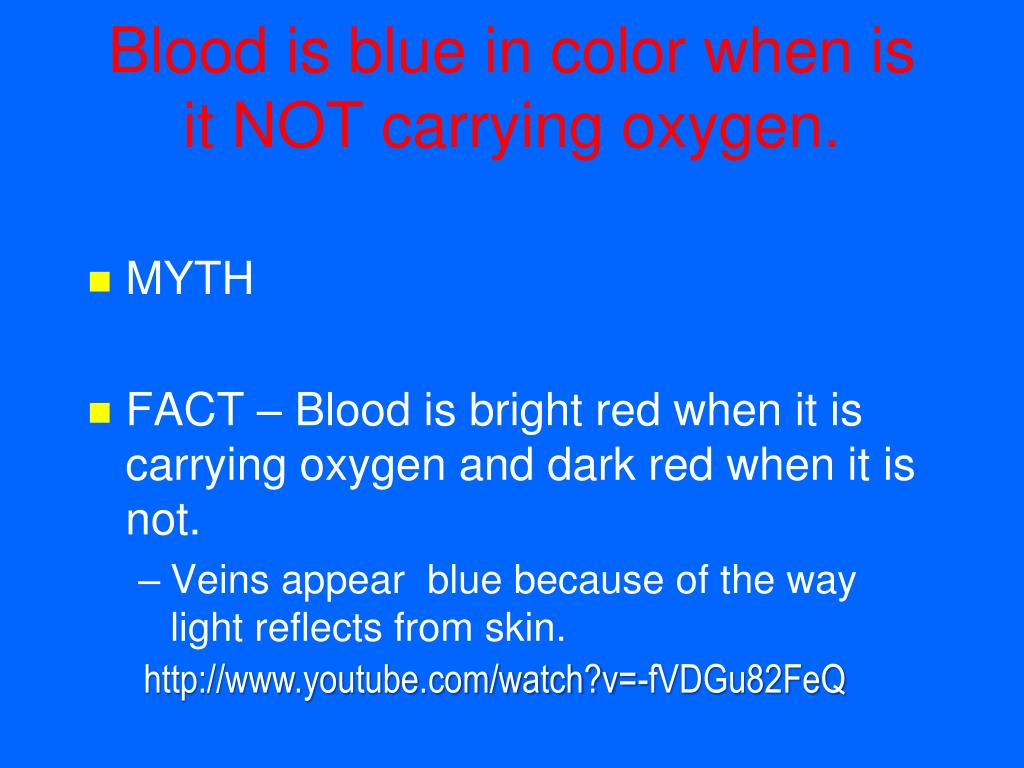
Why Veins Look Blue Through Skin Even Though Human Blood Is Always Red
When human skin does turn visibly blue or purple, the cause is an optical surface symptom known as cyanosis, not blue blood.
Cyanosis occurs when the concentration of deoxygenated hemoglobin in capillary beds exceeds 5.0 grams per deciliter. Under severe hypoxemia, heart failure, or extreme cold, peripheral vessels constrict. The sluggish, deoxygenated blood turns exceptionally dark burgundy.
Because very little bright red light reflects through the skin, the blue scattering effect intensifies. The lips, nail beds, and earlobes take on an ashen, blue-gray cast. The blood itself remains dark red; the surface simply lacks the scarlet photons needed to mask the natural scattering of blue light.
In rare toxicological cases, human blood can take on unusual colors:
- Methemoglobinemia: The iron in hemoglobin oxidizes from ferrous (Fe2+) to ferric (Fe3+), preventing oxygen binding and turning blood a distinct chocolate-brown.
- Sulfhemoglobinemia: Sulfur integrates into the hemoglobin molecule, producing an irreversible dark greenish-black pigment.
Even in these critical emergencies, blood never takes on the bright blue seen in medical diagrams.