Fingerspelling Vs. Name Signs: What Linguists and Deaf Culture Reveal
The single most common faux pas among hearing students is creating their own sign name. Online tutorials and short-form videos often encourage people to invent clever hand movements that merge their initials with their favorite hobbies. Within the Deaf community, doing so is seen as cultural overreach.
Deaf community etiquette reserves the bestowing of sign names exclusively for Deaf people. This rule is grounded in both practical linguistics and community history. Without an intuitive grasp of sign language phonology, hearing learners routinely create combinations that are accidental profanities, anatomically awkward, or already used by prominent local figures. More importantly, sign names operate as cultural gifts. They signal belonging and document an individual's organic integration into a shared visual world.
Institutional perspectives reinforce the importance of these boundaries. In resources like the Parent Guides to Hearing Loss published by the Centers for Disease Control and Prevention (CDC), early visual communication is framed not merely as a set of mechanical gestures, but as an immersion into a rich linguistic culture. Similarly, the 2025 volume More Than Signs: International Sign as Distributed Practice from Cambridge University Press demonstrates how sign conventions rely on communal validation rather than isolated individual decisions.
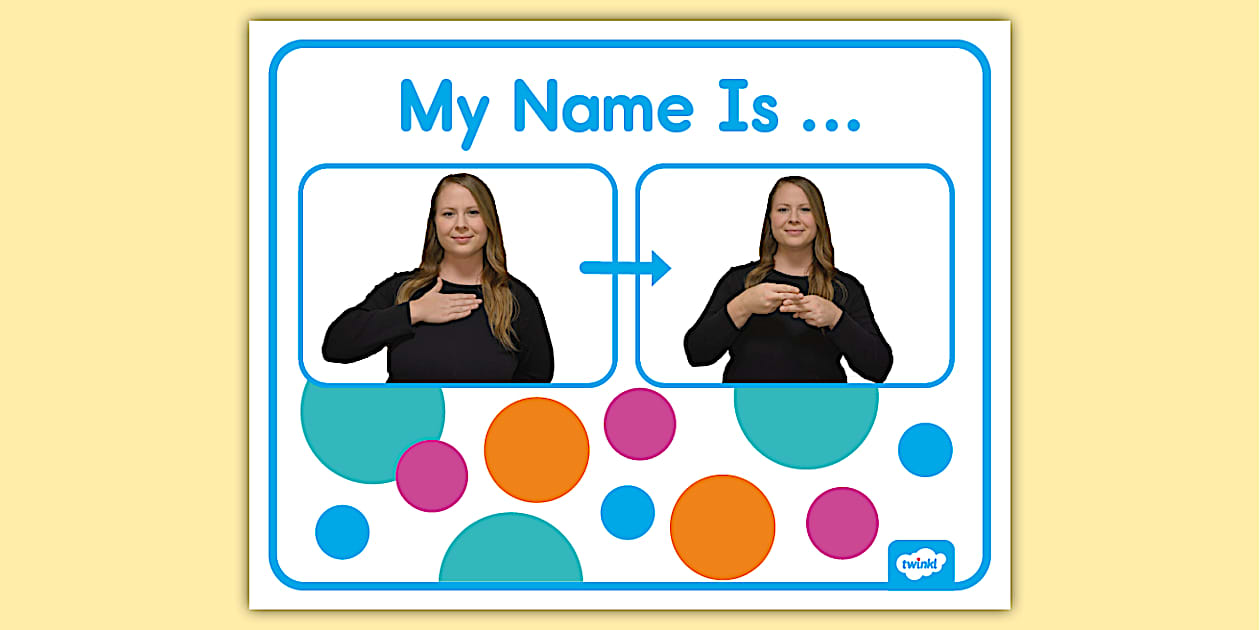
Self-naming bypasses the reciprocal nature of signing. When you assign yourself a visual marker, you circumvent the social evaluation that underpins visual identity. If you are hearing and have not been gifted a sign name by a Deaf person, the proper response to "What is your name?" is simple: fingerspell it, clearly and without embellishment.