
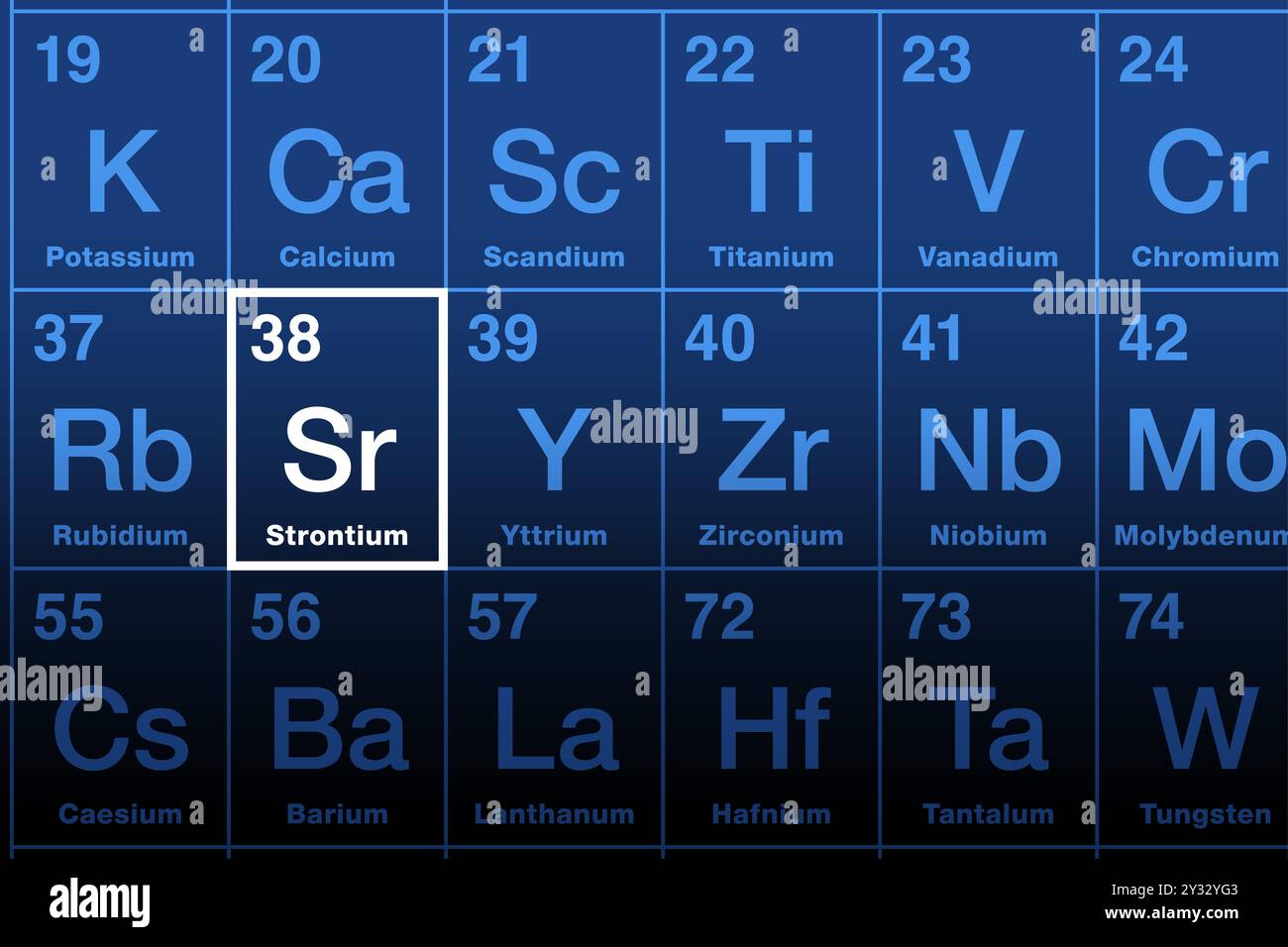
The Evolution of Element Sr: from 18Th-Century Discovery to Modern Tech
In 1790, Scottish physician Adair Crawford and chemist William Cruickshank analyzed mineral samples extracted from the lead mines of Strontian, an isolated settlement in Argyll. At the time, mineralogists routinely misclassified local samples as aerated barytes (barium carbonate). Crawford noted distinct physical properties: the Strontian mineral dissolved differently in acids, demonstrated unique crystallizing patterns, and yielded significantly higher solubility in warm water than true barium compounds.
Crawford predicted the presence of a new chemical species, but proof required better tools. In 1808, Sir Humphry Davy used electrolysis to separate the pure metal at London's Royal Institution. Davy passed an electrical current through a damp paste of strontium oxide and mercuric oxide, distilling the resulting amalgam to isolate pure metallic strontium. Davy named the element after its town of origin, preserving the Scottish village's name permanently on the periodic table.


